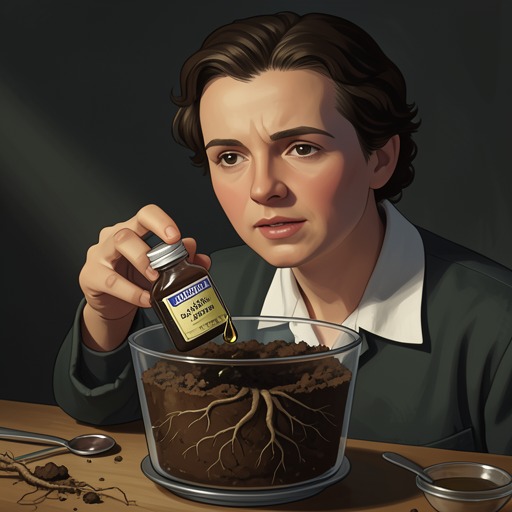
Silent Spring
Silent SpringSilent Spring is Rachel Carson’s book about the consequences of widespread pesticide use, and its title gives a sound to the catastrophe at its center: the missing voices of spring. The book begins with a fictional town where birds fall silent and people suffer unexplained deaths, then insists that the imagined calamities are assembled from disasters that have happened in real communities. The fable’s silence is not nature’s doing. It is the consequence of human action—and the book’s reason for explaining what chemical control can set in motion.
The book and its starting point
Rachel Carson undertook to write Silent Spring in 1958, at the age of fifty. She had spent most of her professional life as a marine biologist and writer with the U.S. Fish and Wildlife Service, and had become a world-famous author. Other book projects, in fields that promised the same research and intellectual pleasure as her earlier work, were already in mind. Her direction changed as she and her scientific colleagues became alarmed by the widespread use of DDT and other persistent poisons in agricultural control programs.
The book opens not with a technical account but with a town rendered unrecognizable. The feeding stations in its backyards are deserted; the few birds still seen tremble and cannot fly. Mornings once filled with robins, catbirds, doves, jays, wrens, and many other calls have become soundless. The familiar signs of spring remain as an expectation against which their absence can be heard. Carson’s fable makes environmental damage perceptible through what has vanished.
The town is expressly imaginary, not a report of one place that underwent every described disaster. Carson says that she knows of no community that suffered the whole sequence, while stressing that each disaster has occurred somewhere and that many communities have experienced a substantial number. The invented town therefore gathers scattered realities into a single, stark possibility: a grim danger already advancing almost unnoticed may become a future that people themselves have made.
From silence to explanation
The fable’s decisive reversal is its account of responsibility. No witchcraft and no enemy action have stopped the rebirth of life; the people have done it themselves. That turn makes the opening more than a vision of desolation. It establishes the book’s central question—what has silenced spring in so many towns—and announces that the chapters that follow will attempt to explain the causes rather than leave the imagined disaster as an unexplained mystery.
The image of silence also gives the book a way to render harm that may be dispersed across places and unfold through consequences rather than a single spectacular event. The town concentrates those effects so a reader can grasp them together: birds absent or incapacitated, human deaths, and the ordinary landscape stripped of its familiar sounds. The structure moves from an imagined whole to evidence from particular programs and places. Its emotional force comes from the collision between an apparently recognizable spring and the possibility that its defining life has been removed.
Chemical programs and ecological consequences
The later examples connect the opening warning to concrete control measures. In the fall of 1959, about 27,000 acres in southeastern Michigan, including numerous suburbs of Detroit, were heavily dusted from the air with aldrin pellets. The operation supplies a particular scale, place, season, and method for the book’s account of chemical intervention: the imagined threat is linked to a large program carried out over lived communities, not merely to an abstract concern about poisons.
Carson’s historical argument also distinguishes short-term pest suppression from the processes that can restrain a pest over time. The Japanese beetle, after entering the United States, increased rapidly during its first dozen years, free of the restraints that held it in check in its native land. By 1945, however, it had become only a minor pest across much of the territory it had spread through. The book attributes that decline largely to parasitic insects imported from the Far East and to the establishment of disease organisms fatal to the beetle. Set beside the large-scale chemical campaigns, this history directs attention to biological relationships and to forms of control that do not depend on treating an infestation as an isolated target.
The book’s evidentiary reach extends beyond its opening image and the examples most directly represented here. Its contents move through chapters on a fable, the obligation to endure, and the elixirs of death; its concluding pages return to the consequences of human action and to the possibility that insects have been turned against the earth. The chapter sequence makes the opening’s question a framework for investigating a wider pattern rather than a self-contained literary warning.
Meaning and reception of the title
Silent Spring names both a threatened season and a failure of perception: birdsong can disappear from ordinary life while the causes of its loss remain unnoticed. The opening uses the absence of sound to make environmental injury immediate, then counters the apparent unreality of its fictional setting with the insistence that its component disasters have happened. The title thus gathers the book’s movement from warning to explanation. Spring still signifies renewal, but its silence reveals how thoroughly human intervention can alter the conditions that make renewal possible.
The book’s closing promotional language carries the image of silence into a broader indictment. One endorsement calls it a chronicle of the century for the human race, while another presents it as an indictment confronting disastrous consequences. Those phrases frame the book as more than a catalogue of individual poisonings: its subject is a human relationship with the earth that can make the living world, and the evidence of damage to it, disappear from daily experience.